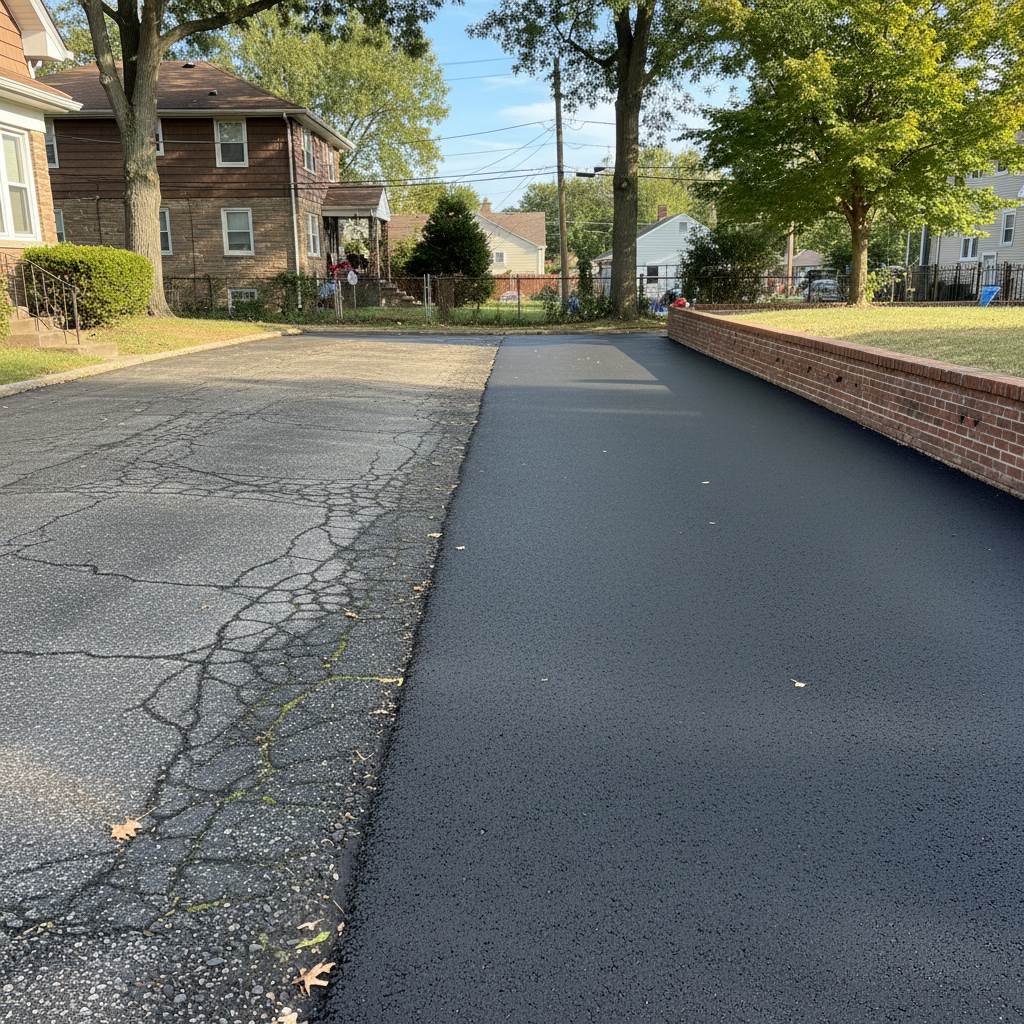
Your driveway's seen better days, huh? Cracks, potholes, maybe it just looks tired. You know you need to do something, but what? For most folks, it comes down to two main choices: an asphalt overlay or a full-on driveway replacement. As someone who's been laying asphalt all over the Bronx for years, I've seen both done right and done wrong. Let's talk about what's really involved with each, so you can make a smart decision for your home.
Asphalt Overlay: The Quick Fix?
An overlay is exactly what it sounds like: we clean up your existing asphalt, fix any major potholes or bad cracks, and then lay a fresh, new layer of asphalt right on top. Think of it like putting a new coat of paint on a wall—it covers the old stuff and makes it look new again.
Cost
This is usually the big draw for overlays. They're almost always cheaper than a full replacement, sometimes by a good chunk. You save on labor for demolition and disposal, and you use less material overall. If your budget is tight, an overlay might seem like a no-brainer.
Durability
Here's where you gotta be smart. An overlay is only as good as what's underneath it. If your existing asphalt has a really solid base, with just surface cracks and wear, an overlay can last you a good 8-15 years. But if the original problems go deeper—like a failing base or serious structural issues—that new layer isn't going to fix it. It's like putting a band-aid on a broken bone; it might look okay for a bit, but the problem's still there. And it'll show up again, probably sooner than you'd like. We see this a lot in places like Pelham Bay, where older homes might have driveways that weren't built with the best drainage or base prep to begin with.
Maintenance
Just like any asphalt, you'll want to sealcoat an overlay every few years to protect it from the elements. Regular cleaning and quick repair of any new cracks will help extend its life.
Appearance
When it's first done, an overlay looks fantastic—smooth, black, just like a brand-new driveway. The only real difference you might notice is that the driveway will be a little bit higher than it was before. This can sometimes cause issues with garage door clearances or drainage if not planned for properly.
Full Driveway Replacement: The Long-Term Solution
A full replacement means we tear out every single bit of your old driveway—all the asphalt, and sometimes even the base material underneath it. Then, we prepare a brand-new sub-base, lay down fresh aggregate, and finally, pave with new asphalt. It's a complete do-over.
Cost
No two ways about it, a full replacement costs more upfront. You're paying for demolition, hauling away all that old material, new base work, and more new asphalt. It's a bigger project, so it costs more.
Durability
This is where you get your money's worth. With a full replacement, you're starting from scratch. We can properly grade the area, make sure drainage is excellent, and build a strong, stable base. This is crucial in the Bronx, especially with our freeze-thaw cycles that can wreak havoc on poorly constructed driveways. A well-installed full replacement can easily last 20-30 years, sometimes even longer, with proper maintenance. You're investing in the future of your property.
Maintenance
The maintenance is similar to an overlay—sealcoating and crack repair are still important. But because the underlying structure is sound, you'll likely deal with fewer major issues over its lifespan.
Appearance
It's a brand-new driveway. It looks perfect, and you don't have to worry about raising the grade significantly. It's a clean slate.
So, What Should You Do?
Here's my honest take: if your driveway has widespread cracks, soft spots, drainage issues, or if it's just really old and crumbling, a full replacement is almost always the better long-term investment. You'll pay more now, but you'll avoid headaches and potentially costly repairs down the road. It's like building a house—you want a strong foundation, not just a pretty facade.
An overlay can be a good option if your existing asphalt is generally in good shape, with just minor surface wear, fading, or shallow cracking. It's a good way to refresh its look and add a few more years of life without breaking the bank. But it's critical that the underlying base is solid. If I come out to your place and see deep, alligator cracking or areas that move when you drive over them, I'm going to tell you straight up that an overlay isn't going to cut it. We won't do work that we know isn't going to last; that's just not how Aim High Asphalt Co. operates.
The best thing you can do is have a pro come take a look. We'll assess your driveway's condition, check the base, and talk through your options, your budget, and what you're hoping to achieve. We'll give you an honest assessment, not just try to sell you the most expensive job. That's how we do business around here.